Sunday, 4 May 2014

SCIENCE


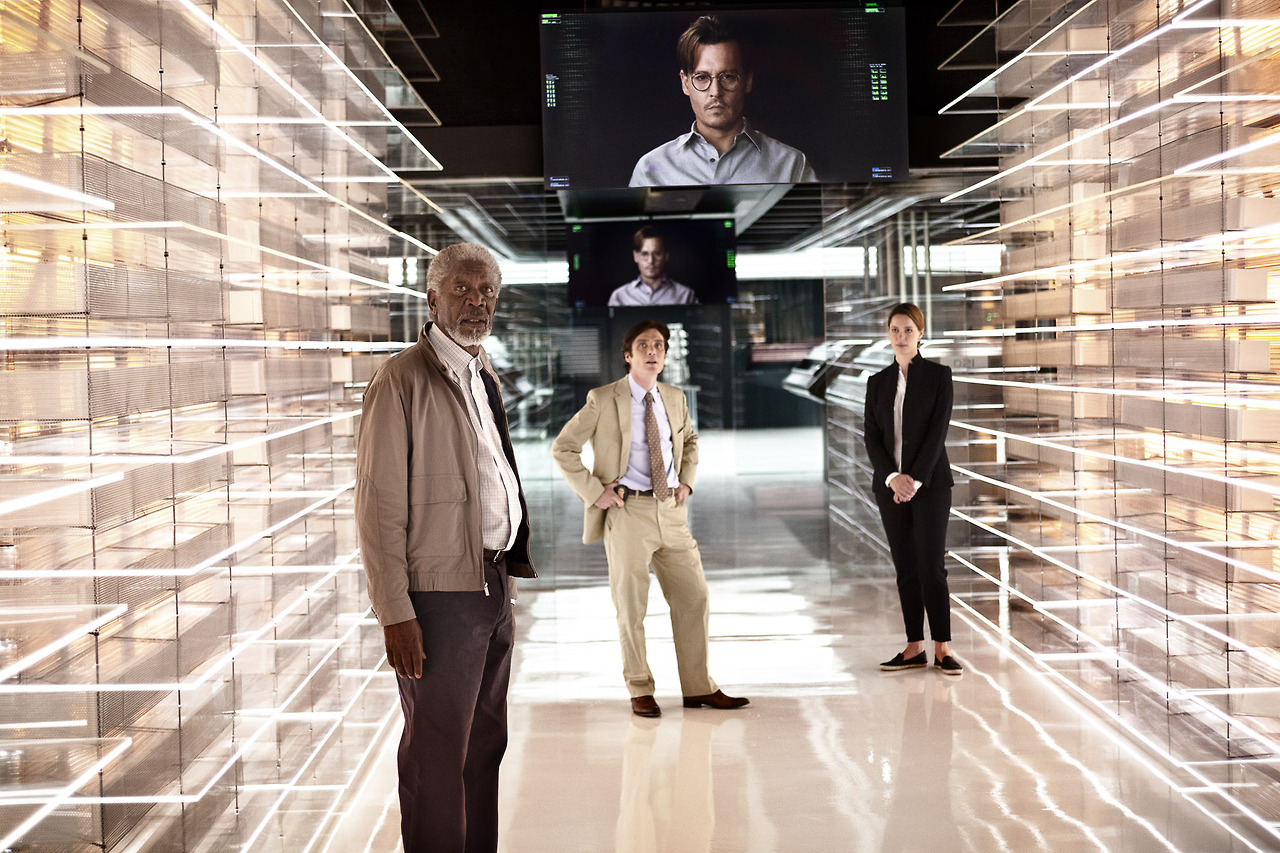
Photo: Trascendence still via Kurtzweilai.net

"Success in creating AI would be the biggest event in human history. Unfortunately, it might also be the last, unless we learn how to avoid the risks, says a group of leading scientists." Stephen Hawking, Stuart Russell, Max Tegmark and Frank Wilczek wrote an article in The Independent that starts like this: "With the Hollywood blockbuster Transcendence playing in cinemas, with Johnny Depp and Morgan Freeman showcasing clashing visions for the future of humanity, it's tempting to dismiss the notion of highly intelligent machines as mere science fiction. But this would be a mistake, and potentially our worst mistake in history." Read full article in The Independent. E.T.P. 5'

Image via Newsweek.

Anna Bernasek wonders in Newsweek: If scientists can make Doritos addictive, can’t they do the same for kale? "At stylish restaurants in California, leafy kale has replaced ordinary lettuce in the classic Caesar salad. In some parts of New York, kale smoothies are more common than bagels, while at Whole Foods supermarkets nationwide, kale chips have crept into the snack aisles." Read full article in Newsweek. E.T.P. 3'

DESIGN, BUSINESS & INNOVATION

Photo via PSFK.
Good news for independent designers! The MoMA Design Shop now will sell successfully crowdsourced projects. "Crowdfunding campaigns have led to numerous contributions in the arts, fashion, and technology, and when it comes to crowdfunding Kickstarter is king. Despite the numerous successful projects that come out of Kickstarter, many of these items are hard to find once the funding period comes to an end. MoMA Design Store, being made aware of this problem, has decided to sell several successful Kickstarter projects during this year’s NYCxDESIGN." Read full article in PSFK. E.T.P. 3'

Image via The Daily Dot.

"Dubious tweets may soon become a thing of the past. TweetCred is a Chrome extension that rates the credibility of tweets on a scale of 1-7. Users will see each tweet in their timeline accompanied by seven stars. The more blue stars, the more credible the tweet. Users can also give feedback, telling TweetCred—get it? like “street cred”—whether a given rating is too high or too low". Read full article in The Daily Dot. E.T.P. 3'

Image via Mashable.


Nice infographic in Mashable presenting a brief story of data storage. "When you think about player pianos, your thoughts probably gravitate toward creepy ghosts rather than data storage innovation.
But you're wrong. The machines "know" which keys to play by reading data stored in punch cards — pieces of stock paper with holes punched into them. In the late 19th century, American inventor Herman Hollerith invented an electronic means by which to tabulate the information stored on them. In doing so, he set in motion modern data storage." Have a look in Mashable. E.T.P. 6'

CULTURE & ENTERTAINMENT


Image via Le Petit Prince.

Adam Gopnik in The New Yorker: "Of all the books written in French over the past century, Antoine de Saint-Exupéry’s “Le Petit Prince” is surely the best loved in the most tongues. This is very strange, because the book’s meanings—its purpose and intent and moral—still seem far from transparent, even seventy-five-plus years after its first appearance. Indeed, the startling thing, looking again at the first reviews of the book, is that, far from being welcomed as a necessary and beautiful parable, it bewildered and puzzled its readers." Read full article in The New Yorker. E.T.P. 7'


Photo via 7Capas Tumblr.


Jeff Beer in FastCoCreate writes about society's change of perception of skate culture: "Thanks to Dogtown & Z-Boys, we all know that modern street skateboarding and its culture was born in California. But a new interactive project from the National Film Board of Canada reveals that a little known Canadian film was a pioneer in both skateboarding film and the development of Direct Cinema, a movement of the late '50s and early '60s that helped change the face of filmmaking." Read full article in Fast Company. E.T.P. 7'

OUR WEEKLY PROCRASTINATION


Image: Still of Eleanor Ambos: Interior World via Nowness.


Short video shared by our friend Carla about Eleanor Ambos, a lovely 'crazy' character that I didn't know before. It's called Eleanor Ambos: Interior World, it was directed by Michael Ellis and Nowness presents an extract of this documentary short that was an official selection at this year’s South by Southwest film festival. Watch the excerpt in Nowness. E.T.P. 3'25''


Sunday, 27 April 2014

The Procrastinator (some) Times Sunday 27th of April Edition


EDITORIAL

Hello everyone, hope you're having a nice day. This is today's edition: the most recent court decision and a summary of the Venezuelan situation for the outsider's eye in our News section; in Science, we feature a great Spotlight by Lance Ulanoff (via Mashable) on the virtual reality renaissance; in our Design, Business & Innovation section everything you think you know about the Internet is wrong; Sadie Smith and the story of our beloved Moleskines in our Culture section; In Dog We Trust  shares interesting articles about adopted squirrels and introduce us to Cesar Frenchie; and in Our Weekly Procrastination section we invite you to visit the wonderful Chris Marker's exhibition at the Whitechapel Gallery.

Happy Sunday and happy reading!

NEWS

Photo: Juan Barreto via AFP.

Firstly, the most important thing that happened in Venezuela this past week was that the Constitutional Court  determined that the right to peaceful demonstration, established on the Article 68 of the Venezuelan Constitution, "is not an absolute right" as guarantees to life and health. We kind of already knew that, but now, it's legal. Read resolution here (link in Spanish).

This is how people reacted, explained by AFP: "Several thousand people took to the streets of Caracas and other Venezuelan cities Saturday to protest education reform plans and restrictions on the right to demonstrate". Read full article here


Photo via The Objective / El Subjetivo.

And just in case any of the readers of this little procrastinator's newspaper still have any doubt of what type of government is the Venezuelan one, I translated a post wrote by Laureano Márquez in the blog The Objective (link in Spanish) because is a good attempt to explain Venezuela's situation to someone that doesn't live there or that hasn't been following the situation closely. Its oversimplified, but again, if someone wants more information I can gladly provide it or you can check the posts tagged #sosvenezuela and find loads of articles. Please excuse my imperfect English specially with technical/legal terms (any correction or suggestion will be appreciated), hope is useful for you to understand Venezuela a little bit more.

"To explain what happens in Venezuela to someone that has not live there the past 15 years is really complex, because, as the proverb goes: God is in the details. Formally, Venezuela is seen as a solid nation with a solid democratic system that contemplates periodic elections. That is appearance, of course, details tell a whole other story:

• The division of powers is non-existent. All are subdued to one, the executive, leaving the citizens in a state of legal defenselessness.
Constant practice of political intolerance to dissenting; opposition members are qualified systematically as "traitors", "fascists", "conspirators" (without ever giving any proofs), which translates in political exclusion and limitations on the exercise of citizens' rights.
• Crackdown on peaceful protestors; violations to Human Rights, torture, prison, illegal dismissal of congressman and mayors rightfully elected, opposition leaders jailed, etc.
• Lack of a reliable electoral system, as 4 of the 5 counselors are openly pro-government. Absence of an auditable elections record, evident irregularities like double voters, intimidation of voters, electoral centers with results of 100% of votes in favor of the Government option, harassment of opposition election witnesses, and a more than evident opportunism in election campaigns with blatant and illegal use of the State's resources.

Also, there is an economic crisis of unpredictable consequences, due to politics like:

Expropriations of companies that in state hands became corrupt and unproductive.
 • Exchange controls that prevent free access to foreign exchange. Governmental control in this area has generated a record corruption, the figure is close to US$ 30,000,000.
High inflation. In the official figures, which some experts say are made ​​up, it is close to 57%.
• Shortage of basic goods and food, had force the Government to establish a ration card. Queues 5 and 6 hours to get oil, milk or corn flour have become every Venezuelan's reality.

All these led to the protests that started back in February and haven't stopped. The student movement has staged peaceful protests in reaction to the violence and insecurity in the country, that leaves thousands of deaths each year, kidnappings and robberies. The government reacted violently repressing the protesters and inciting paramilitary groups to act; more than 40 victims in two months and a total of tortured, arrested and processed students never seen in Venezuela since the most cruel of our dictatorships.

Venezuela's serious governance crisis, not only have roots in the economy, deficient health system (there are no medicines), education, food, but also in the alarming insecurity that situates Venezuela as the second most violent country in the world.

In this climate, a process of dialogue between government and sectors of the opposition was initiated. So far it has generated a lot of expectations, but no concrete results.


SCIENCE


Image via Mashable.

Great spotlight on the virtual reality renaissance by Lance Ulanoff in Mashable. This is how it starts: "I'm flapping my wings. Not hard, but slowly and smoothly. At 25 feet across, my wingspan is so great I don't need to exert much energy to achieve lift. In the distance, I see an island under an azure sky. This is my home. Off to my west, the sun is setting and the sky glows with warm, orange light.
Spotting movement in the ocean below, I bend my body slightly to the left and begin a gentle dive. As I approach the shore, I spot my prey splashing in the shallows. I lean back, keeping my wings fully extended so I can glide just above the water. I'm right over the fish. I pull in my wings, bend forward sharply and dive into the water. I emerge with a fish in my mouth. Success.
Better yet, I did all this without ever leaving the ground or getting wet." Read full article in Mashable. E.T.P.

DESIGN, BUSINESS & INNOVATION


Photo via TIME Magazine.

Tony Haile writes in TIME: "If you’re an average reader, I’ve got your attention for 15 seconds, so here goes: We are getting a lot wrong about the web these days. We confuse what people have clicked on for what they’ve read. We mistake sharing for reading. We race towards new trends like native advertising without fixing what was wrong with the old ones and make the same mistakes all over again." Not an average reader? Read full article in TIME. E.T.P. 12'


Photo via Fast Company.


The Truth About Google X: An Exclusive Look Behind The Secretive Lab's Closed Doors: Space elevators, teleportation, hoverboards, and driverless cars: The top-secret Google X innovation lab opens up about what it does--and how it thinks. Read the full article by Jon Gertner in Fast Company. E.T.P. 10'

CULTURE & ENTERTAINMENT


Zadie Smith, photo by Chris Boland via The Paris Review Facebook Page.

“Rome says: enjoy me. London: survive me. New York: gimme all you got.” Zadie Smith’s story Miss Adele Amidst the Corsets from The Paris Spring issue is now available in its entirety online, go ahead and have a lovely read. E.T.P. 28'

Image via The New Yorker.


Adrienne Raphel share in The New Yorker the story of the very famous Moleskine: "Maria Sebregondi, the founder of Moleskine, was born and raised in Italy. Her mother worked as an editor and a graphic designer. “I remember, when I was a child, having graphics around all the time,” she said. Sebregondi’s background is primarily in literature and publishing, but, she said, a “kind of visual sensibility was strong in my family.” Moleskine-style notebooks had been produced since the eighteen-fifties, by small French bookbinding companies, and distributed in Paris bookstores; they were used by Picasso, Hemingway, Van Gogh, and the like . . . But, in 1986, the last traditional moleskine manufacturer, a small stationer in Tours, France, closed down. Moleskines went extinct, driven out by cheaper, mass-produced notebooks." Read full story in The New Yorker. E.T.P. 9' 

IN DOG WE TRUST


Photo: Cesar Frenchi via his Instagram.


Hello dog lover! Hope you're having a beautiful weekend!

Here are some links for you:


Enjoy your Sunday! And follow Ceezy Freezy on Instagram
 
 
-
In Dog We Trust is edited by: Carola Melguizo from La Guía del Perro.