Showing posts with label artificial intelligence. Show all posts

Sunday, 31 May 2015

SCIENCE: The Bionic Man


Video Still via New York Times.


This is truly brilliant: "Les Baugh lost his arms as a teenager. Engineers at Johns Hopkins are trying to give them back, but better. Mr. Baugh is testing a robotic prosthetic that he can control with his mind." Have a look at the Zackary Canepari, Drea Copper and Emma Cott video in The New York Times Bits. E.T.P. 9'

Sunday, 25 January 2015

SCIENCE & TECHNOLOGY: Self-Aware Mario

Photo via The Guardian.


German researchers have developed a version of Super Mario Bros., that makes Mario self-aware. He is able to experience emotions and act autonomously in response to them. The AI also understands voice instructions and questions. It's sophisticated enough that Mario can be fed information that he will remember and eventually act upon it. There's a five-minute video in Polygon that gives a detailed explanation of how this experiment works, have a look here. (E.T.P. 5')

And a nice article by our beloved Charlie Brooker in The Guardian: "This meta-Mario experiences basic emotions, is compelled to act by urges such as “hunger” and “curiosity”, and is painfully aware that he only exists within a meaningless two-dimensional artificial framework from which he can never escape. As such, he’s more advanced than I am. And he looks better in a hat. I think I hate him, although there’s every possibility that’s just what I’ve been programmed to do." Read full article in The Guardian. E.T.P. 3'

Sunday, 14 September 2014

SCIENCE & TECHNOLOGY


Photo via Gizmodo.


Andrew Liszewski writes in Gizmodo: The first videos we saw of DARPA's advanced ATLAS robot it was just an infant, learning to walk and balance on its own. During the DARPA Robotics Challenge the humanoid robot handled itself like a capable child. And now almost a year later the folks at MIT are happy to announce that ATLAS has finally reached the level of a lazy, shiftless teenager. Read full article in Gizmodo. E.T.P. 3' And learn about DARPA's plans and future challenges in this article of Humanoïdes (in French). E.T.P 8'

GIF by Zoe Burnett via Rhizome.

Not precisely a very recent article, but these past days I came across the review that Megan Heuer wrote of Jonathan Crary's book: 24/7: Late Capitalism and the End of Sleep. Megan analyzes the book really well highlighting Crary's most interesting arguments (as some other of his claims sound like something a crazy man with a megaphone would shout in a public square, and I personally think that is not necessary "capitalism" but "industrialism", but well, that's the subject of a different book, ain't it?). Anyway, here's an extract of Megan's article: "Offering a genealogical account of the reformatting of time from the beginning of the Industrial Revolution to the present, 24/7 is relentlessly negative: sleep is the last unleveraged form of human activity and it is violently threatened by a world in which the divisions between night and day, between rest and work, are disappearing due to mutations in the experience of time produced by unceasing digital networks, new metrics for productivity, and ever-expanding forms of control and surveillance . . . As he elaborates the specific textures (or lack thereof) of this new temporality, signaled with the shorthand 24/7, Crary ties the disruption of sleep to an emerging and intensifying set of demands around our productivity as workers." Read full article in Rhizome, and please (I've been reading a lot about this: sleep at least 7 hours every night). E.T.P. 7'

Sunday, 8 June 2014

SCIENCE & TECHNOLOGY


Photo via Wired.

Joseph Flaherty in Wired: "Japan is famous for its robotics industry which has developed everything from faceless industrial robots that power factories to cybernetic cats that provide companionship to the elderly. There’s also a subculture of scientists trying to create robots that could pass as humans and London-based photographer Luisa Whitton has captured their stories in a series called What About the Heart?" Read full article in Wired. E.T.P. 6'


Photo via Fast Company.

Nathan Han, a 15-year-old from Boston fascinated by bioinformatics won the first prize of the Intel International Science and Engineering Fair for creating a computer program that can predict how harmful gene mutations related to cancer might be. Read full story by Ariel Schwartz in Fast Company. E.T.P. 3'

Sunday, 11 May 2014

SCIENCE

Photo via The Independent.

Lucy Hunter Johnston in The Independent: "Fear of a robot taking over your job is growing. A One Poll survey just out says that 31 per cent of us suffer from this anxiety. Then again, it’s not all bad news when it comes to man and machine: 17 per cent of us would also happily hop into bed with them. It’s a statistic that raises a number of questions. Is sex with a robot cheating? Would there be an age of consent? But perhaps the least obvious is: what do the other 83% have against the idea?" Interesting, huh? Read full article in The Independent. E.T.P. 8'


Photo: The Procrastinator (some) Times.


ELECTRONIC cigarettes made their American debut seven years ago. People have bickered about them ever since. Some praise e-cigarettes—which deliver a vapour with nicotine, but no tobacco—for helping traditional smokers to quit. Others fret that they will promote nicotine addiction and reduce the stigma of smoking, which in America now ranks somewhere between theft and public indecency.
On April 24th American regulators stepped in (as the European Parliament did in February). The Food and Drug Administration (FDA) proposed rules for e-cigarettes. These would, among other things, ban sales to children and require firms to list ingredients, include warnings that nicotine is addictive and register new products with the agency. The FDA did not propose banning flavours or advertising, but may do so in future. It will accept comments on its plan until July 9th. Even after it finalises this set of rules, it may later issue further restrictions. The Economist. E.T.P. 4'

Sunday, 4 May 2014

SCIENCE


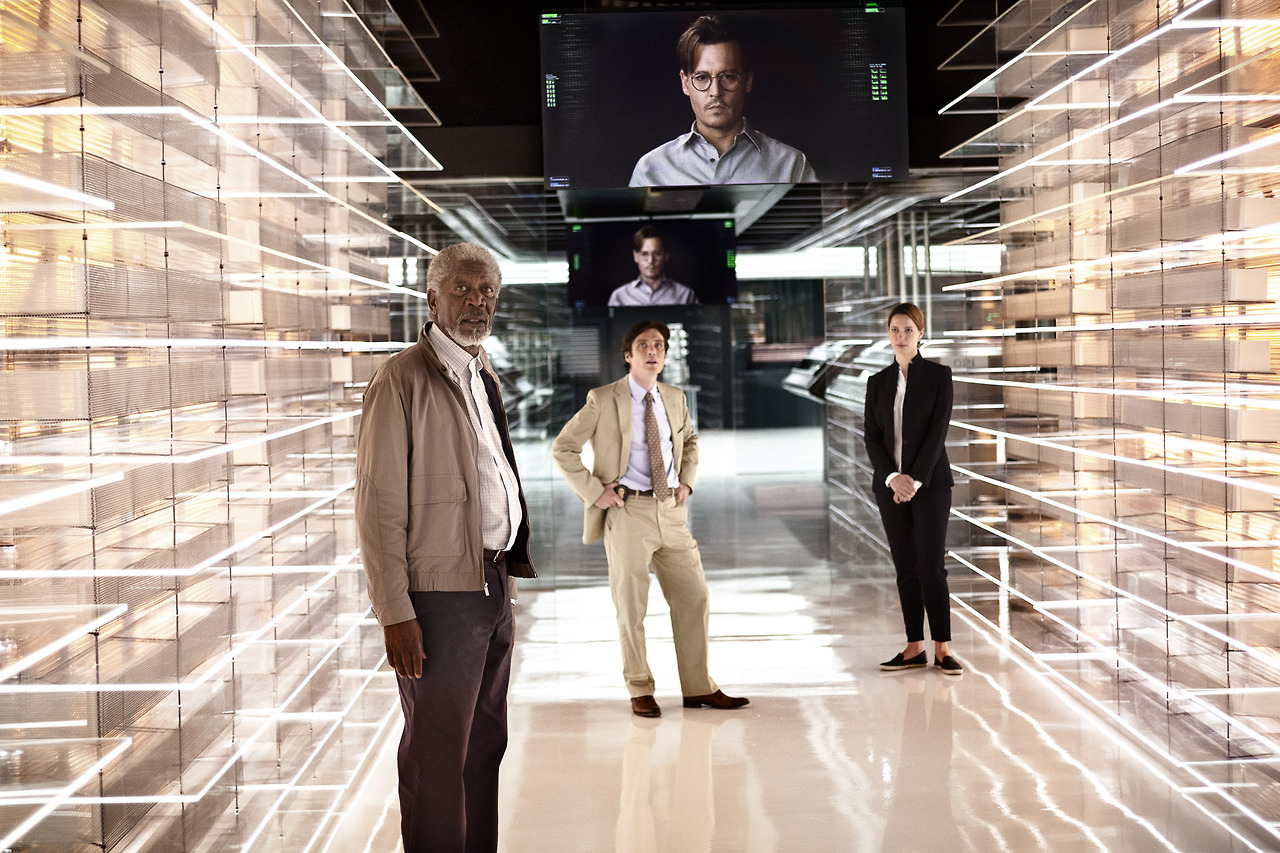
Photo: Trascendence still via Kurtzweilai.net

"Success in creating AI would be the biggest event in human history. Unfortunately, it might also be the last, unless we learn how to avoid the risks, says a group of leading scientists." Stephen Hawking, Stuart Russell, Max Tegmark and Frank Wilczek wrote an article in The Independent that starts like this: "With the Hollywood blockbuster Transcendence playing in cinemas, with Johnny Depp and Morgan Freeman showcasing clashing visions for the future of humanity, it's tempting to dismiss the notion of highly intelligent machines as mere science fiction. But this would be a mistake, and potentially our worst mistake in history." Read full article in The Independent. E.T.P. 5'

Image via Newsweek.

Anna Bernasek wonders in Newsweek: If scientists can make Doritos addictive, can’t they do the same for kale? "At stylish restaurants in California, leafy kale has replaced ordinary lettuce in the classic Caesar salad. In some parts of New York, kale smoothies are more common than bagels, while at Whole Foods supermarkets nationwide, kale chips have crept into the snack aisles." Read full article in Newsweek. E.T.P. 3'

Sunday, 13 April 2014

SCIENCE


Image via Gizmodo.


As impressive as Boston Dynamics' humanoid robot ATLAS moves, it's still not completely free to explore wherever it wants. Thick trunk lines keep it tethered to machinery and pumps that provide power, hyrdraulic fluids, and of course communications and data. But researchers at MIT are now working to free ATLAS of its leash-like umbilical cord sometime in the next six months. Read full article in Gizmodo. E.T.P. 5'


Photo: A mite on an eyelash via The Creator's Project.


There is no better way of describe what you are about to see than the way the Creator's Project did: Timelapses Of Microscopic Nature, In All Its Stunning (And Disgusting) Glory. Yes, disgusting. Louie Schwartzberg at TED 2014 in Vancouver unveiled "a National Geographic-sponsored voyage into glimpses of Earth that the naked eye could never see: microscopic mites on our eyelashes, the tongues of snails, and even the skin of sharks. The hyper-defined images are miraculous, but admittedly a little terrifying—especially the snapshot of nano organisms that crawl on already-microscopic parasites." Read full article and have a look at the video in The Creator's Project website. E.T.P. 9'