Showing posts with label books. Show all posts

Sunday, 28 June 2015

CULTURE & ENTERTAINMENT: Free Russian Classics eBooks in the Moscow Metro


Photo: Dostoyevskaya Station in Moscow, Image by Zigurds Zakisvia Open Culture


"Late last year, the Moscow subway system launched a pilot where Moscow subway commuters, carrying smartphones and tablets, can download over 100 classic Russian works, for free. As they shuttle from one station to another, riding on subway cars equipped with free wifi, straphangers can read texts by Dostoevsky, Tolstoy, Chekhov, Pushkin, Bulgakov, Lermontov, Gogol and more. Perhaps that takes the sting out of the soaring inflation." Read full article in Open Culture. E.T.P. 4'

Sunday, 21 December 2014

THE PROCRASTINATOR'S 2014 READING LIST


Dear Procrastinators, this year instead of sharing the reading lists of  The New York Times or The Guardian, we decided to make our own, so we reached out to our friends and contributors (two days ago!) and asked them to share those books they enjoyed procrastinating the most with during 2014. These are the answers we got,  truly great recommendations from fellow procrastinators sharing the joy of reading. Enjoy and add yours to the comments!


2. The Martian, Andy Weir


"All of them are highly recommendable. The first one is dense, more than 800 pages, but it's -give or take- the best book I've read in my entire life. It's about the discovery of the atom, about the physics of the beginning of the 20th century, the world wars, the atomic bomb, etc. Very interesting narrative from a critical point of view. The second book is fiction, it tells the story of an astronaut that ends up in Mars, alone. Very geek, but fun (and I read that the movie is on its way and it'll be directed by Ridley Scott). Finally, the 3rd one, I read it on the middle of my Himalayan fever. It's the real story of an Everest expedition in 1996 that ended up tragically. The author is Jon Krakauer who survived  that expedition and reached the top (he's the same authot of Into the Wild). You can read the book in two days, is one of those you cannot put away (and btw, I also read they'll be doing this film next year!)"

Luis, Geophysical Engineer.
Bogotá.


1. My Year of Meats, Ruth Ozeki

2. The Goldfinch, Donna Tartt

"These are two books that are far from being masterpieces but I devored them in few days and they made me stop doing stuff that I should have done... I think that's the Procrastinator's spirit, right?"

Victoria, Illustrator & Animator
Madrid.

"2014's procrastination: Southern Reach trilogy by Jeff Vandermeer (that honestly is one book divided in three episodes.) Imagine a book that condense the adventure and mystery essence of Verne with Lovecraft's strangeness and suspense, the best WTFery of Lost, and X-Files conspiracies involved with the decadent and dystopic spectrum of Terry Gilliam circa 12 Monkeys. Now imagine that everything that does not imply knowing what happened in the 12th expedition and what the hell happened in the X Area are just secondary stories and voilá... perfect procrastination."
Germán, Illustrator & Animator.
Caracas.
1. The Art of Asking, Amanda Palmer.

"One interesting fact is that through her twitter account she connected people that couldn’t purchase the book with people that offer to purchase book and deliver them worldwide for free! Her community of fans is one of the most powerful and enacted I’ve ever seen. And this book reveals a bit about this phenomenon. I think that depending on the eyes you read it with, you can reach different “insights". For me,  the book gives a very personal and artistic explanation on the “economy of sharing” phenomenon." 
Lily, Interaction Designer.
New York.


2. Steal like an Artist, Austin Kleon.
3. Show Your Work, Austin Kleon.
"The first book I discovered it at the library of the Pompidou Center, just after leaving the Henri Cartier-Bresson exhibition. I loved that there was an interview with Elliot Erwitt, one of my favorite photographers. I discovered "Steal like and artist" and "Show your work" both from Austin Kleon, thanks to some friends in England. We were talking about how to promote and sell our work. Also, I just started Mirages: The Unexpurgated Diary of Anais Nïn, 1939-1947. No idea how that book fell into my hands."
Karem, Cinema & TV Producer.
Caracas.


"The only book I can think of is this Murakami one, after which I quit smoking, started running and decided to become my own boss... but that was in 2013." (After that introduction, I think that book deserved to be here, right?) 
Marie, Social Entrepreneur / Playful Pony.
London.


"This year I read a lot of books, but mainly thesis-related ones, these two I found them on a Saturday morning in one of Broadway Market's book shops and decided to buy them as they seemed to have some loose relation with the themes I was exploring (actually I was just looking to procrastinate). Goldsmith's Uncreative Writing turned out to be exceptionally related, and his point of view on writing/copying/re-contextualizing/originality, and all things language related in the digital era in fact ended up giving a whole new twist to my dissertation project. Goldsmith is known for being the guy that tried to print the Internet, and most recently it was mentioned a lot because he will be offering a class at the University of Pennsylvania called "Wasting Time on the Internet". On the other hand Turchi's work -and beautiful maps- helped me a lot when facing the challenge of creating a story, a  universe, specially in a language that is not my own. It's not super extraordinary, but the time I spent procrastinating with this book inspired me enough to start a new project that hopefully you will discover soon! Finally, if you must know, I am fighting with Albert Camus's The Myth of Sisyphus. Maybe this time next year I'll be done with it... maybe not."

Ana, Procrastinator.
The Cloud.

Sunday, 12 October 2014

CULTURE & ENTERTAINMENT


Photo via The Guardian.


Hadley Freeman in The Guardian writes a very well argued, honest and tough critic of Lena Duhnam's new book: Not That Kind of Girl. Here's a fragment: "Dunham has now made what are essentially three versions of her autobiography by the age of 28: a film, three seasons of a TV show and a book, and the gruel is running thin. The anecdotes in the book often feel like rejected ideas for Girls episodes, which, in fact, at least one of them was. Dunham describes her need to share as a compulsion: "I have to tell my stories in order to stay sane," she writes. But she also needs an editor (or an Adam) who can say to her, "Great, but perhaps we don't actually need to publish a 10‑page chapter consisting purely of your food diary?" She is a brilliant talent who will write better books than this – and, really, who can blame her for taking the money (reportedly £2.3m) and running? It's a shame, though, that her US publishers didn't take more time with her instead of rushing to cash in on the Lena Dunham industry. But then Dunham is probably used to that by now." Read full article in The Guardian. E.T.P. 5'

Sunday, 17 August 2014

CULTURE & ENTERTAINMENT


Images: Peter Mendelsund book jackets for The Trial, Hopscotch and of course Cover.


I 'discovered' book jacket designer and Knopf's Associate Art Director, Peter Mendelsund about 5  years ago when I came across the wonderful design work he did for Kafka books and his very interesting reflexions on what make Kafka, Kafka. I found everything extraordinary, honest and refreshing, and being a Kafka fan myself I entered in contact with him, he turned out to be a really nice person and a super interesting character. Back then I started following his blog, where he shows not only his finished works but also a little bit of his process and his thoughts on design and books. One of his most famous covers are the ones he did for Stieg Larsson's The Girl with the Dragon Tattoo trilogy, one of the ones I love most is the one he did for Rayuela, the beautiful English edition I own (shown above).

This past week I discovered that now he is publishing two books of his own (two!). One is Cover a full color collection of his design work of the past eleven years, that includes a little bit of writing, as in his blog, "as well as essays from some of the writers and designers I’ve been fortunate enough to know, and/or work for and with over this short span of time" -says Mendelsund. The second book is an exploration into the phenomenology of reading What We See When We Read, a remarkable work of nonfiction where Mendelsund "combines his profession, as an award-winning designer; his first career, as a classically trained pianist; and his first love, literature—he considers himself first and foremost as a reader—into what is sure to be one of the most provocative and unusual investigations into how we understand the act of reading," according to the Amazon summary (that sadly has no author specified). 

Several articles appeared about Mendelsund's books, I chose two: one nice interview in LA Times (E.T.P. 5') and a great Q&A about the utility of book covers in the digital world in Slate (E.T.P. 3'). Go ahead and find out more about Peter Mendelsund nice work, and if you read his books, please let me know so we can discuss them! (WWSWWR is due to be released in the UK in September 10th).
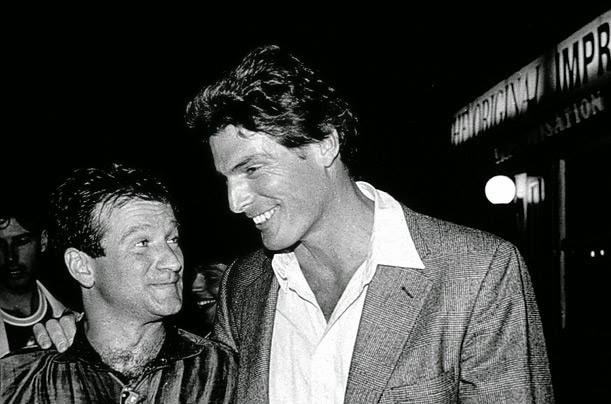
Photo via the Badass Digest.


We are as deeply shocked and sad as everyone else with Robin Williams' dead. Here are some links with the best homages from the Internet, including five in-depth interviews compiled by Long Reads. Robin William's greatest lesser-known roles, compiled by Dazed Magazine (including a clip from one of my favorites: The Fisher King). A heart-warming article by Sarah Larson in The New Yorker called Robin Williams: The Best Weirdo. And finally, a piece in The Guardian by Dean Burnett on why we should not call suicide a 'selfish' act: "News of Robin Williams’s death due to apparent suicide, said to be a result of suffering severe depression, is terribly sad. But to say taking your own life because of such an illness is a ‘selfish’ act does nothing but insult the deceased, potentially cause more harm and reveal a staggering ignorance of mental health problems."

Also, the photo above was taken from a FB status of the Badass Digest, this little story can be read as  the photo caption:  

"When Christopher Reeve was in the hospital, awaiting a back surgery that had a fifty/fifty chance of killing him, a man burst into his room. He was wearing surgical scrubs, talking in a Russian accent, and said he was there to give a rectal exam. It was Robin Williams; the two men had been roommates together at Juilliard. Later Reeve said of his life-long friend:

“For the first time since the accident, I laughed. My old friend had helped me know that somehow I was going to be okay.”

That's sort of what Robin Williams did for all of us."

Sunday, 11 May 2014

CULTURE & ENTERTAINMENT


Image via The Guardian.

Hayao Miyazaki: his final bow. The much-loved animator's Studio Ghibli has become part of the aesthetic fabric of Japan. But The Wind Rises will be Miyazaki's swansong as director. What happens next? Paul McInnes writes in The Guardian: "Studio Ghibli is the animation studio founded by Miyazaki and his partner Isao Takahata in Tokyo in 1985. Over the 29 years that followed they have released 19 full-length feature films, eight of them directed by Miyazaki. Of these, 2001's Spirited Away is the biggest film of all-time in Japan and was the first to gross $200m worldwide. When Japanese consumers are polled as to their favourite brands, they often put Ghibli top, ahead of Toyota and Sony. But Ghibli's importance in its home country goes beyond financial success; in a way it has helped to define a sense of national character, creating new fables for the country such as the environmental parable Princess Mononoke. Ghibli has come to stand for both an aesthetic and moral code, continuing the practice of hand-drawn animation as everything else turns digital and creating stories for children that offer a more complex morality – and have a more vivid imagination – than its peers." E.T.P. 18'


Image via The Independent.

Semi Chellas interviews Matthew Weiner in The Paris Review: "Born in 1965, Matthew Weiner is barely old enough to remember the period with which his television series Mad Men has now become almost synonymous. His office is exactly what one might hope for the creator of Don Draper: a stylish mixture of midcentury modern furniture, with a cabinet full of top-shelf liquor. But it turns out that the furniture came with the building, which was designed in 1955, and the liquor, mostly gifts, is wasted on Weiner, who hardly drinks at all." Read The Art of Screenwriting No. 4 in The Paris Review. E.T.P. 33'

Photo via The Topless Pulp Fiction Appreciation Society.

Topless Pulp Fiction Appreciation Society takes off. Allison Flood comments about this peculiar society in The Guardian's Blook Blog: "I'm not a member of a book club – perhaps it is rooted in the days of my education, but I just feel that I'd hate having to read something by a certain time. However, I am loving this week's slew of articles about New York's Outdoor Co-ed Topless Pulp Fiction Appreciation Society, a book group which loves "good books and sunny days and enjoying both as nearly in the altogether as the law allows". Read full article in The Guardian. E.T.P. 4'

Sunday, 23 March 2014

DESIGN, BUSINESS & INNOVATION


Photo via Mashable.

Cloak is definitely the best app I've heard of in a lot of time. This is how is described in Mashable: A new app claims to be the social network for the anti-social. While most social media apps focus on helping you get closer to your friends, Cloak uses location data to make it easier for you to avoid your connections. The app pulls in location information from your social networks to show you where friends are so you can avoid accidentally bumping into people you don't want to see. Read full article in Mashable. E.T.P. 3'


Photo via Fast Company.

John Pavlus writes in Fast Company: "Ever wondered what George Lois, Daniel Libeskind, and Margaret McCurry have on their nightstands? Wonder no more, thanks to Pentagram's new website.
Some people think I treat Pentagram too fawningly around here. Well, can I help it if they keep doing great pieces of work? Here's another: Designers & Books, a spare, handsome website that lets you glance over the shoulder of your favorite A-list designers and see what books inspire them. With 50 designers, 678 books, and a few other bits and bobs to choose from, there's definitely something here for everybody." Read full article in Fast Company. E.T.P. 7'


Sunday, 12 January 2014

CULTURE & ENTERTAINMENT


"Her" movie still via The New Yorker.

The Samantha Test. Brian Christian in The New Yorker writes about “Her,” the new film by Spike Jonze. A movie situated in the “slight future"—a world just at the change point when artificial intelligence has become capable of interacting with humans more or less seamlessly. Something that reminds him -and us- of Joseph Weizenbaum, a professor of computer science at M.I.T., that in 1966 wrote a computer program called Eliza, "which was designed to engage in casual conversation with anybody who sat down to type with it". Read this super interesting article in The New Yorker. E.T.P. 7'

You can also read Who is 'Her'? James Franco's review in VICE. E.T.P. 7'


Illustration by Matthew Roberts via Slate.

Rebecca Schuman in Slate review two books that attempt to capture the 'gaunt specter of modernism and make him talk' in The Ghosts of Kafka Present, this is how its starts: "Franz Kafka has been dead for nearly 90 years, which I suppose has given him ample time to get very good at haunting people. Such as, for example, Susan Bernofsky, author of a fastidious new translation of The Metamorphosis, and Jay Cantor, whose provocative story collection Forgiving the Angel dedicates itself to the gaunt specter of modernism. The books express their authors’ continuing fascination with Kafka from nominally opposite sides of the literary spectrum. And yet both of these books want desperately to bring a dead man back to life, so that he can explain himself, so that he can (metaphorically) finish novels that break off midsentence, so that he can solve the mystery of his own existence. That they cannot succeed is not only no mark against these two fascinating books but works to underscore exactly what drove both authors to chase his ghost in the first place." Read full article in Slate, totally recommended. E.T.P. 9'


Woody's Other Family Tree (fragment) via The New York Times.


The New York Times presents a very peculiar Woody Allen's alternative family tree that includes his influences, muses, heirs, and 'adopted kids'. The infographic includes some well known characters always associated with Allen like Groucho Marx, Sigmund Freud, Diane Keaton and Noah Baumbach; and also some less obvious ones like Joan Rivers, Chris Rock and The Simpsons. The map it's fun to watch, although I feel that they overindulged Lena Duhnam by saying that she is the new Woody Allen. I like her, don't get me wrong, but she is not the new Woody Allen. Luckily the new Woody Allen is still Woody Allen.  Have a look at full map in The New York Times. E.T.P 10'.

Sunday, 15 December 2013

CULTURE & ENTERTAINMENT


Painting by Bo Bartlett via Fast Company.

Good news! Well, more like a confirmation for the skeptical ones. "A team of social scientists at the University of Arkansas is trying to scientifically prove the benefits of exposure to art. What they found, in a recent study published in the journals Education Next and Educational Researcher, is that students who are exposed to cultural institutions, like museums and performing arts centers, not only have higher levels of engagement with the arts but display greater tolerance, historical empathy, as well as better educational memory and critical thinking skills". Read full Jennifer Miller's article in Fast Company.


Movie still via The New Yorker


Joel and Ethan Coen’s new film Inside Llewyn Davis UK premiere is the 24th of January, and after reading Richard Brody's article it in The New Yorker is worth saving the date. Inside Llewyn Davis 'is a dramatization of an aphorism by Nietzsche about a pair of common “mistakes”: “Behind a remarkable scholar we not infrequently find an average human being, and behind an average artist we often find—a very remarkable human being.”
The Coens make no mistake in the discovery of a very remarkable human being behind an average artist, and they look upon their protagonist—a struggling folk singer in the Greenwich Village scene in 1961—with extraordinary sympathy and curiosity.' Read full article here. E.T.P. 7'


Jonas Mekas via The Atlantic.

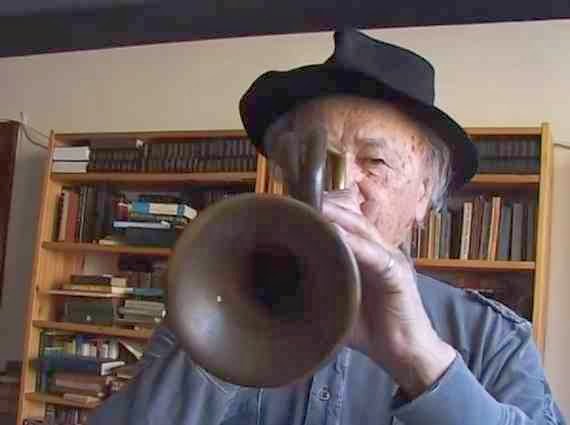
Alexis C. Madrigal in The Atlantic tells us that one of the best websites on the Internet belongs to Jonas Mekas. "From the introductory video, in which Mekas welcomes his friends to the site and plays the bugle, to the videos of Alan Ginsberg or Mekas playing with his first Sony Camcorder, the site exudes the joy of creation." We visited and it's absolutely true, and as Mekas say "it's very exciting!" One awesome place for inspiring procrastination, updated almost daily with photos, films, documents and stories by the lovely 91 years old genius. So go ahead and read Alexis's article here (E.T.P. 3'), and visit Jonas Mekas's website here (E.T.P. 30-90').

Image via The New Yorker.


The New Yorker asked some contributors like Dan Chiasson, Teju Cole and Junot Diaz, for their favorite books they read this year. Most of them named new books, some picked older favorites. Have a look at this interesting list. Part I and Part II. E.T.P. 12' (total).


Movie still Frances Ha. Creenplay by Greta Grewig.

14 Screenwriters writing. "In the starry constellation of literary pursuits, screenwriters have always existed, reputationally if not financially, somewhere due south of novelists and maybe southeast of poets and playwrights. With their riches and big-screen credits, people who wrote for the movies used to be able to at least lord over lowly TV writers, but even that dynamic has reversed in recent years. TV writers are now routinely lauded as auteurs. Screenwriters are still screenwriters, i.e., the people who write the scripts that the directors and actors will eventually rewrite, mangle or ignore." Have a look at what Greta Grewig, Ethan Hawke and Richard Likelater have to say about screenwriting in this article in The New York Times. E.T.P. 7'

Sunday, 8 December 2013

CULTURE & ENTERTAINMENT


Photo via Dazed Digital.


Expending time with your relatives during Christmas makes you believe that your family is absolutely dysfunctional? This Dazed Digital article is here to tell you that you are not alone. "Writers have been lamenting the difficulty of other people for centuries, and there are no other people more frustrating, complicated, guilt-inducing or worthy of ambiguous, literary-fiction-style non-resolutions than the ones you have no power to control. As December descends, check our top ten picks for books to read when you need to commiserate (or an escape from your father’s nagging). " My pick would be "& Sons" but I've just been given Rayuela by Julio Cortázar in English (Hopscotch) so that's what I probably will be reading during this holidays. Read full article in Dazed Digital. E.T.P. 5'

Video still via Creative Review.

I'd Rather Be High. Tom Hingston has directed the video for David Bowie’s latest track. The four-minute film features more than 100 clips of archived wartime footage and typographic details throughout. It's the first music video Tom Hingston has directed and the fourth Bowie promo production company Black Dog Films has worked on this year. It has a strong anti-war message, says Hingston, and juxtaposes scenes of conflict and escapism. Read full article and watch the video in Creative Review. E.T.P 7'

Sunday, 20 October 2013

CULTURE & ENTERTAINMENT


"In both writing and sleeping, we learn to be physically still at the same time we are encouraging our minds to unlock from the humdrum rational thinking of our daytime lives. And as your mind and body grow accustomed to a certain amount of sleep each night — six hours, seven, maybe the recommended eight — so can you train your waking mind to sleep creatively and work out the vividly imagined waking dreams which are successful works of fiction."

This is a quote of Stephen King that Maria Popova shared in Brain Pickings when talking about King's book: On Writing. In the summer of 1999, King was nearly killed while taking his daily walk. A driver struck King as he strode along the gravel shoulder of Route 5 in Maine. While recovering from his injuries, King wrote On Writing.

Read the whole story, including some insightful excerpts and a 25' recording of the whole story in NPR. E.T.P. 32'.


Image: Screenshot of Shortlist website.

Massive spoiler alert! Shortlist pusblished some of the most famous last words in literature. Here's what they say about it: "If you knew you were about to meet your maker you’d try and make your last words before you shifted off this mortal coil pretty darn special, eh? Literary characters are no different – some succeed in reaching some higher state of gravitas; others, well, their last recorded utterances reflect the banality of much of the human condition. Have a look in Shortlist website. E.T.P.: 4'.

Sunday, 22 September 2013

CULTURE & ENTERTAINMENT


Photo: Lefteris Pitarakis/AP, via The New Yorker.

As Oyster, a new app is launch hoping that people are looking for a new way to get access to books. Ian Crouch in The New Yorker poises the question: What does it mean to own a book? The app, usually called "Netflix for books", currently gives users access to more than a hundred thousand titles for a monthly fee of just under ten bucks. So, would you keep buying books or would you just 'stream' them? Read full article here.


 Image: Inside Chanel screenshot via Creative Review.

Inside Chanel is an ambitious online project telling the story of the fashion house and its founder, the amazing Gabrielle 'Coco' Chanel, via a series of online documentaries comprised of archive footage, photos and nice black and white graphics. Have a look at some videos and read full article in Creative Review's Blog.


Image: Stéphane Mallarmé via Wikipedia.

Poetry Isn't as Useless as a Lot of Poets Say It Is. The Atlantic posted an interesting article about a recent speech at Yale that inadvertently sums up what's wrong with the art form these days: Its gatekeepers believe poetry matters because it's poetry, not because of what it says.Read article here.

Sunday, 15 September 2013

SCIENCE

Photo via Spacetoday.org

Little Spacecraft That Could. On Thursday, scientists declared the Voyager spacecraft had become the first man-made object to exit the solar system, a breathtaking achievement that NASA could only fantasize about back when it was launched in 1977. Since its launch Voyager 1 has traveled over 11.7 billion miles, that is equivalent to traveling to the moon and back almost 25,000 times. Read more about it in The Independent.


Illustration: What is the 'god' particle? By Jordin Isip. Via Brainpickings.

Maria Popova of Brain Pickings proudly recommends the book: The Where, they Why and the How: 75 Artists Illustrate Wondrous Mysteries of Science, one of those amazing intersection of art and science. The guys behind Also Online "invited some of today’s most celebrated artists to create scientific illustrations and charts to accompany short essays about the most fascinating unanswered questions on the minds of contemporary scientists across biology, astrophysics, chemistry, quantum mechanics, anthropology, and more". More info and a short video in Brain Pickings.


Looking for a Plan B. Alok Jha, The Guardian's scientific correspondent writes about some of the measures that should be taken by world leaders if the rise in carbon emissions is not curbed within a couple of decade. Launching mirrors into space, triggering algal blooms in the oceans and seeding clouds are among experimental "Plan B" schemes. This is what astronomer royal Lord Rees calls: hacking the planet's climate through geoengineering. Read more in The Guardian.